Where to get married in Paris and Île-de-France — a photographer's guide
Twelve venues I know because I have worked in them, sorted by type and by the constraints that actually matter: light, space, logistics, and what nobody tells you before the visit.
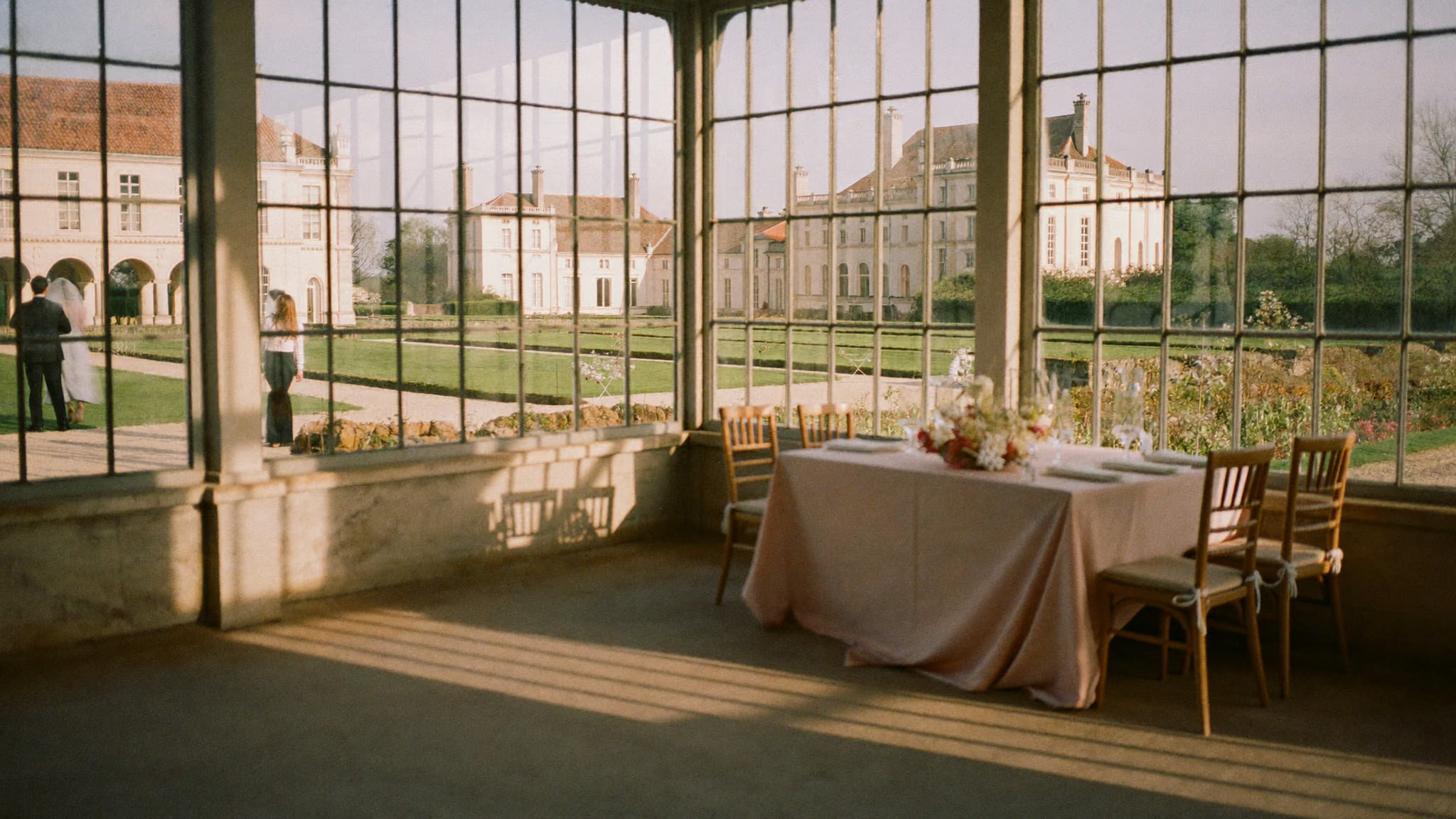
I have been photographing weddings across Île-de-France for several seasons, and you end up knowing venues differently from how their websites present them: where the light falls at six in the evening, where there is no room to step back, and where the wet-weather option is a basement.
Here is what I look at, and twelve venues sorted by type.
What I look at first
Late-day light. It is the only part of the day you cannot move. A venue facing north, ringed by high walls, will be beautiful at noon and difficult at eight in the evening.
Room to step back. A narrow ceremony room forces you to photograph everyone too close, on the same focal length, for forty minutes. It shows in the results.
The backup. See the wet-weather space, physically, before signing. It is the question that causes trouble on the day and nobody asks it during the visit.
Châteaux and estates
Château de Vallery (Yonne) — Pale stone, enormous grounds, west-facing. The façade takes the setting sun head-on. About 1 h 15 from Paris.
Domaine de La Butte (Seine-et-Marne) — Restored barn, genuinely good indoor backup, warm atmosphere. One of the few venues where rain is not a real problem.
Château de Bouffémont (Val-d'Oise) — The closest of the large châteaux to Paris, 35 minutes out. Exceptional main staircase, but low interior light in winter.
Orangeries and glasshouses
Glasshouses are, technically, the best reception spaces there are: abundant diffuse daylight right up to dinner. Be careful in high summer — a south-facing orangery in July becomes an oven by six in the evening, and all your guests migrate outside.
Inside Paris
Arrondissement town halls — The 11th, 12th and 13th have handsome marriage rooms. Ceremonies run ten to twenty minutes: short, with no second take.
Private-hire restaurants — For forty to eighty people, hiring a restaurant often costs less than an estate, with no separate catering, furniture or logistics bill.
Barges — Lovely light reflected off the water, but constrained space and a lot of backlight. Best kept for small guest lists.
The real budget
| Venue type | Hire only, peak season |
|---|---|
| Château or estate, weekend | €3,000 – €8,000 |
| Orangery / glasshouse | €2,500 – €6,000 |
| Private venue in Paris | €1,500 – €4,000 |
| Barge | €1,200 – €3,500 |
On a weekday or off-season, expect 30 to 40% less at almost all of these. It is the single most effective lever on a wedding budget, well ahead of the choice of flowers.
Timing matters more than the venue
An average venue at the right hour produces better photographs than an exceptional venue at the wrong one.
In summer, a ceremony between four and six in the evening places drinks exactly in the falling light. In winter you have to move earlier, to one or two in the afternoon: darkness comes around five, and anything not done before then happens under artificial light.
Torn between two venues? Write to me — I will tell you honestly what I think, even if I am not the one photographing your wedding.
Frequently asked questions
How much does a wedding venue cost near Paris?
Expect €3,000 to €8,000 for venue hire alone at a château or estate in Île-de-France on a peak-season weekend, and €1,500 to €4,000 for a private venue inside Paris for the day. Weekday and off-season prices drop sharply, often by 30 to 40%.
Can you get married in a park in Paris?
Not the ceremony itself. Paris public parks and gardens do not permit wedding ceremonies. They remain available for couple portraits, subject to permission for any professional equipment set up on the ground.
Do you need a wet-weather backup at the venue?
Yes, and you should see it before signing. A backup space that only exists on paper turns into a windowless room on the day. Ask to walk through it physically during the first visit, and check it seats all your guests.
What time should the ceremony be for the best light?
In summer, between 4pm and 6pm: the light is still high during the ceremony and drops during drinks, which gives the best conditions for portraits. In winter, move it to 1pm or 2pm, because darkness falls around 5pm.